

The project “Development of imaging and spectroscopy-based prediction models to assess the quality of fishmeal as an ingredient in salmon feed”was recently completed. The project was funded by the Icelandic Food Innovation Fund and the Rannís Technology Development Fund. Its objective was to develop a prediction model enabling fishmeal producers to assess the quality of fishmeal as an ingredient in salmon feed rapidly, cost-effectively and accurately using simple near-infrared (NIR) spectroscopy and/or hyperspectral imaging.
Most Icelandic fishmeal producers already use NIR technology to measure the chemical composition of fishmeal. Such measurements provide valuable information on its composition but are of limited use for assessing its actual quality as a raw material for aquaculture feed, where nutrient digestibility and effects on salmon growth are of greatest importance.
The project sought to bridge this gap by linking NIR spectroscopy and hyperspectral imaging data with results from growth and digestibility trials using Atlantic salmon. The approach itself is not new, as Norwegian feed manufacturers have developed comparable prediction models and used them for years to assess the quality of the fishmeal they purchase. These models have, however, been kept as trade secrets, giving feed manufacturers a competitive advantage.
By developing comparable NIR prediction models for Icelandic fishmeal producers, the aim was to provide them with the same type of information about the properties of their products that their customers already possess. Such knowledge could strengthen the market position of Icelandic fishmeal, increase value creation and improve producers’ internal quality control.
Today, Icelandic fishmeal is priced largely on the basis of protein content, with less consideration given to quality attributes such as digestibility or effects on fish growth. As Icelandic fishmeal is generally produced from very fresh raw materials in technologically advanced plants, where processing is designed to ensure maximum quality, there is good reason to believe that its value could be assessed on a broader basis than protein content alone.
The project was partly built on an AVS-funded pre-project completed in 2021 with the publication of the report „“Near-infrared spectroscopy: State of knowledge on the use of NIR in the fishmeal industry.“ ”, as well as on the work of the Nordic Center of Excellence Network in Fishmeal and Fish oil.
A final project report has been published, describing the implementation of the study and its main findings. A summary of the report is provided below.
Summary
Global aquaculture is expanding rapidly and has been the fastest-growing food-production sector in recent decades. Worldwide, aquaculture has grown by an average of 6.7% per year over the past three decades. Aquaculture feeds have evolved alongside this growth, as feed ingredients are limited in supply, account for the largest share of production costs and largely determine the carbon footprint of aquaculture.
Almost all fishmeal produced in Iceland is used as an ingredient in salmon feed, where it serves as an important source of protein and energy. Fishmeal is generally priced according to its protein content, while assessment of other quality characteristics, such as digestibility and effects on fish growth, is both time-consuming and costly and requires specialised equipment.
NIR spectroscopy, by contrast, enables rapid, non-destructive measurements of chemical composition and quality and has been widely applied in the seafood sector. Almost all fishmeal plants in Iceland have NIR instruments that are used for internal quality control, including monitoring chemical composition and other quality parameters.
This study investigated whether NIR spectroscopy could predict the chemical composition and quality of fishmeal, as well as digestibility and growth responses in Atlantic salmon Salmo Salar.Twenty-five fishmeal samples of different types and qualities were collected from domestic and international producers. Salmon feed was produced from each sample using the same formulation and subsequently tested in growth and digestibility trials with live fish. The aim was to determine whether a prediction model could be developed to assess fishmeal quality as a raw material for salmon feed, thereby supporting improved quality and more targeted valuation of fishmeal in the future.
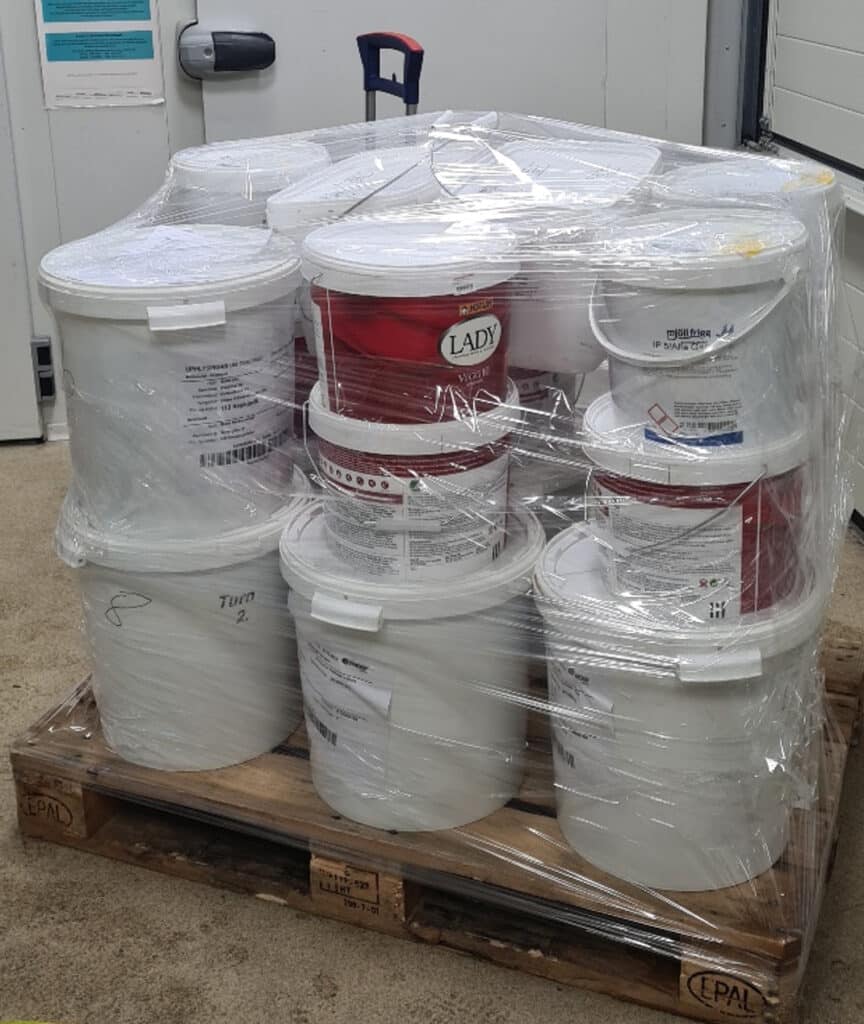
A total of 25 fishmeal samples representing different fish species, qualities and producers were collected and sent to TTZ in Germany, where the aquaculture feeds were produced. Each fishmeal sample weighed approximately 50 kg.
Selection of fishmeal samples
The fishmeal samples originated from nine different producers and were made from various fish species, including blue whiting, herring, capelin, mackerel, anchovy and Gulf menhaden. Chemical analysis showed considerable variation in sample composition. Protein content ranged from 62.3–73.8 g/100 g, fat content from 6.5–12.2 g/100 g and ash content from 10.6–23.8 g/100 g. The moisture content of all samples was within industry standards, at below 10%.
Essential amino acid levels were generally comparable between samples, with the greatest variation observed for lysine (4.5–6.1 g/100 g) and valine (2.8–3.6 g/100 g). Concentrations of biogenic amines and total volatile basic nitrogen (TVB-N) varied substantially between samples, reflecting differences in raw-material freshness and handling prior to processing.
Growth and digestibility trials
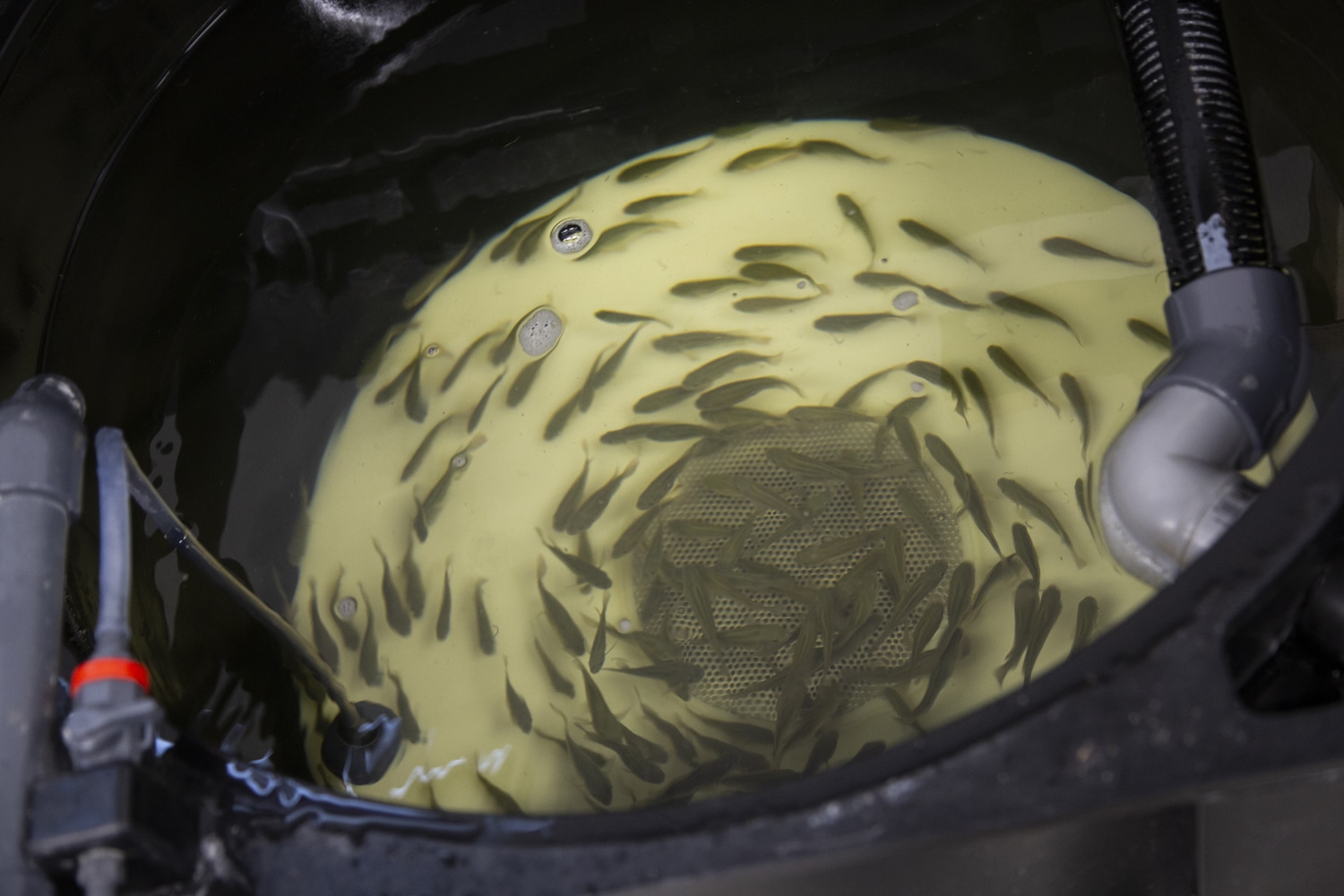
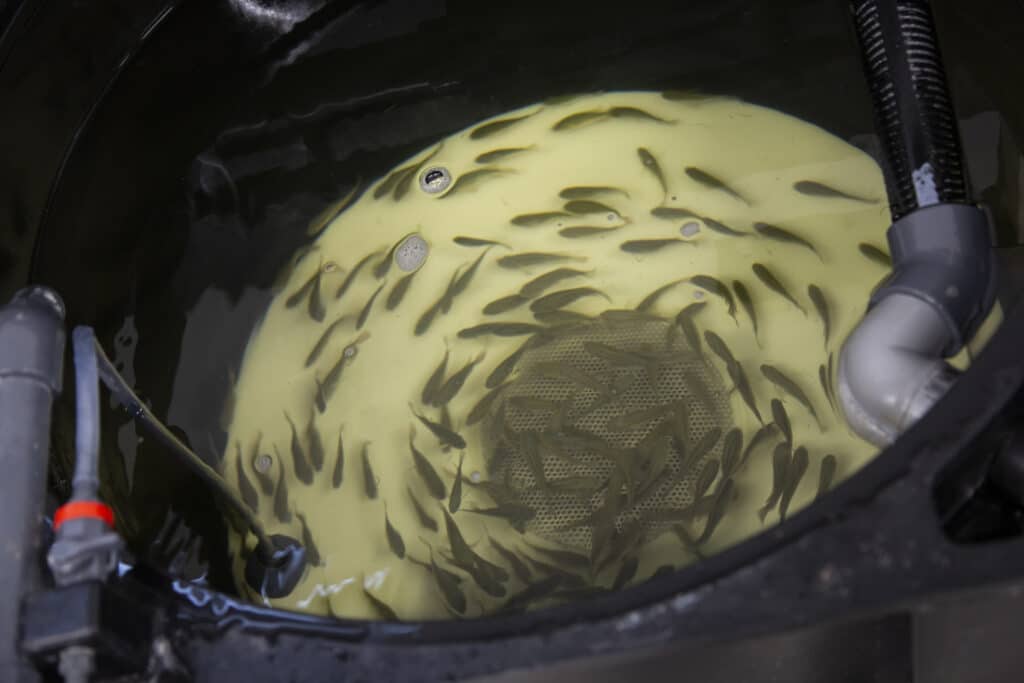
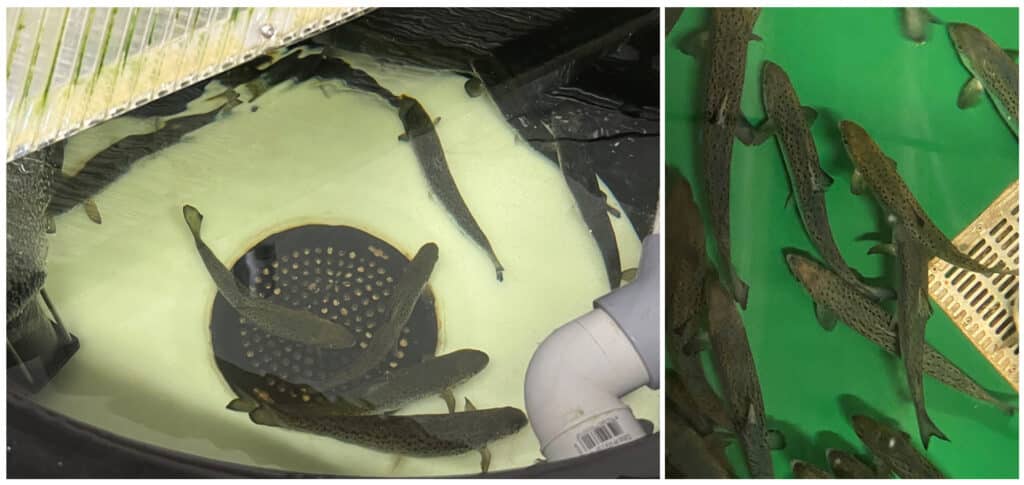
The feeding trials were conducted with Atlantic salmon (Salmo Salar) at the Matís Aquaculture Research Station (MARS) in Reykjavík. Each feed was tested in triplicate over a six-week period. Fish in three tanks received the same feed for six weeks, with a recovery period between trials.
Crude-protein digestibility ranged from 73.0–95.8%, with amino-acid digestibility showing a similar range. Lysine and methionine emerged as key amino acids, as their digestibility was most strongly associated with salmon growth responses and feed utilisation. However, differences in growth rate between feed samples were relatively small. Specific growth rate (SGR Specific Growth Rate) ranged from 0.84–1.14, indicating that differences in fishmeal composition and quality had only a limited effect on overall growth performance under the conditions tested.
NIR spectroscopy and model development
NIR spectra were measured for all 26 samples using a Bruker MPA instrument. Prediction models were developed using partial least squares regression (PLSR) and five different preprocessing methods.
The most reliable prediction models were obtained for moisture content, with a cross-validation coefficient (R²CV) of up to 0.82. Models for water-soluble proteins also showed acceptable predictive performance (R²CV up to 0.65). Prediction models for other variables, however—including amino-acid composition, biogenic amines, TVB-N, digestibility and growth responses—were generally inadequate. The most likely explanation is the small sample set (n = 26), limited variation between samples and an overly narrow range of measured values.
Einnig var kannað hvort ofurrófsgreining hyperspectral imaging gæti nýst við mat á gæðum fiskimjöls sem innihaldsefnis í laxeldisfóðri, en fylgnin reyndist enn veikari en með NIR-litrófsgreiningu.
Results and discussion
Before the study began, it was already clear that NIR spectroscopy can be used effectively for rapid analysis of fishmeal composition and various quality characteristics. The objective of this project was more ambitious: to link fishmeal composition and quality characteristics with key measures of salmon-feed performance, namely digestibility and growth. If successful, this would have enabled the development of a prediction model capable of assessing the effects of fishmeal on salmon digestibility and growth performance before the fishmeal was used in feed production.
The results show that NIR spectroscopy is well suited to rapid analysis of fishmeal moisture content and, to some extent, water-soluble proteins. Reliable prediction of more complex quality parameters, such as digestibility and growth responses, will require a much larger and more diverse sample set. Future work should therefore expand the sample set, increase raw-material diversity, harmonise experimental methods and investigate the potential of non-linear prediction models using independent test data.
In summary, the project did not succeed in developing the intended prediction model, as the number and variability of samples were insufficient to build a model meeting the required reliability criteria.
The report is available here. For further information, please contact jonas@matis.is
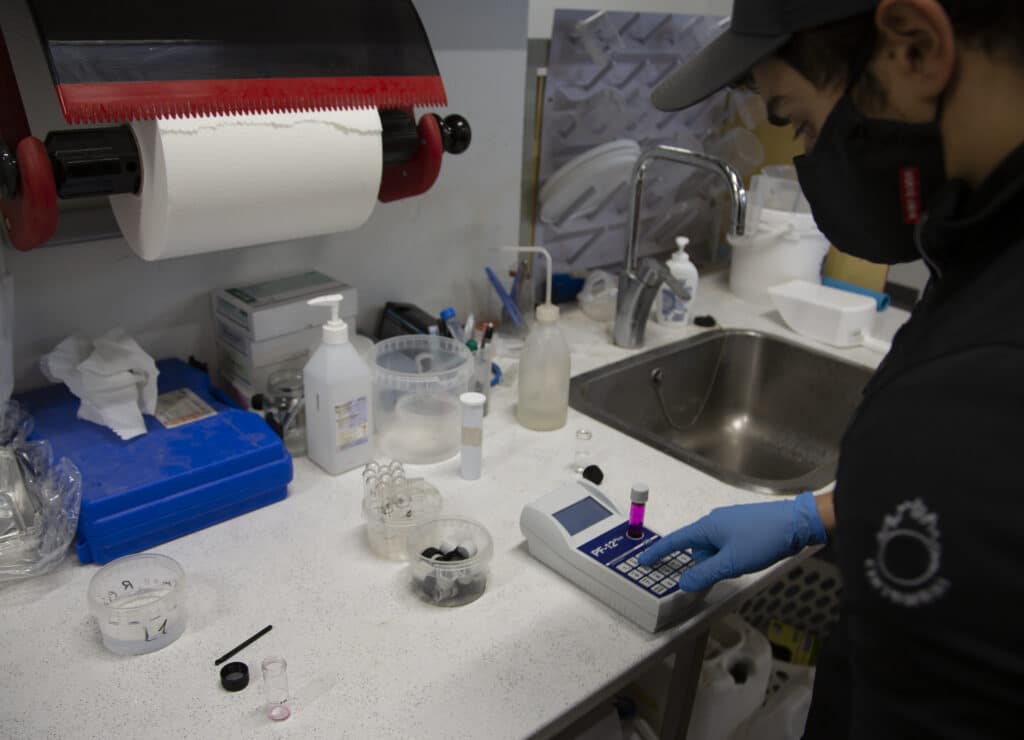
All environmental parameters, including water quality, oxygen and temperature, were closely monitored.
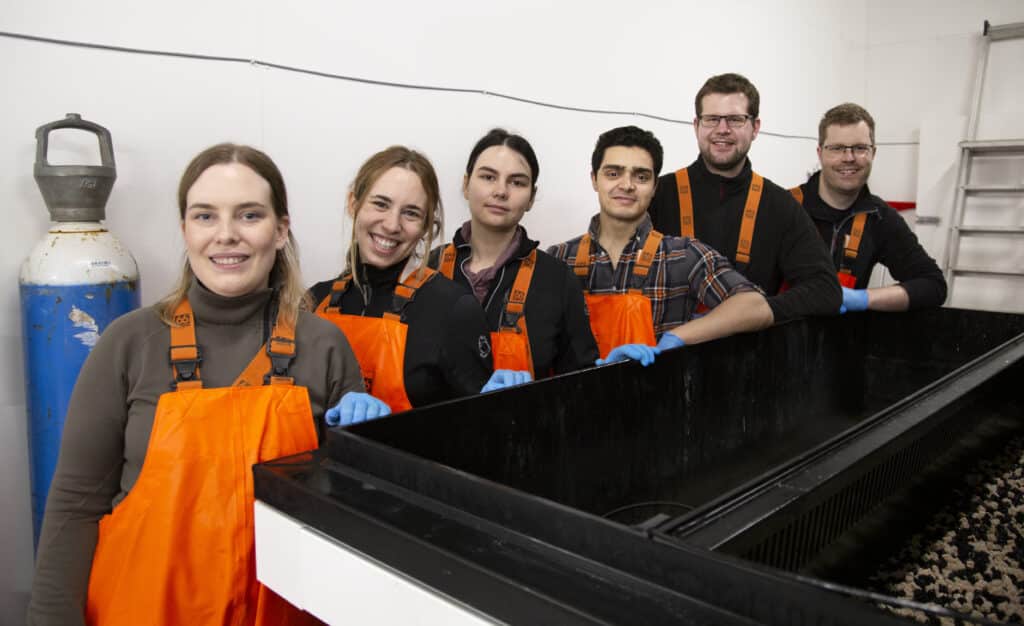
Digestibility and growth trials were carried out at MARS, which is staffed by a team of aquaculture specialists.