
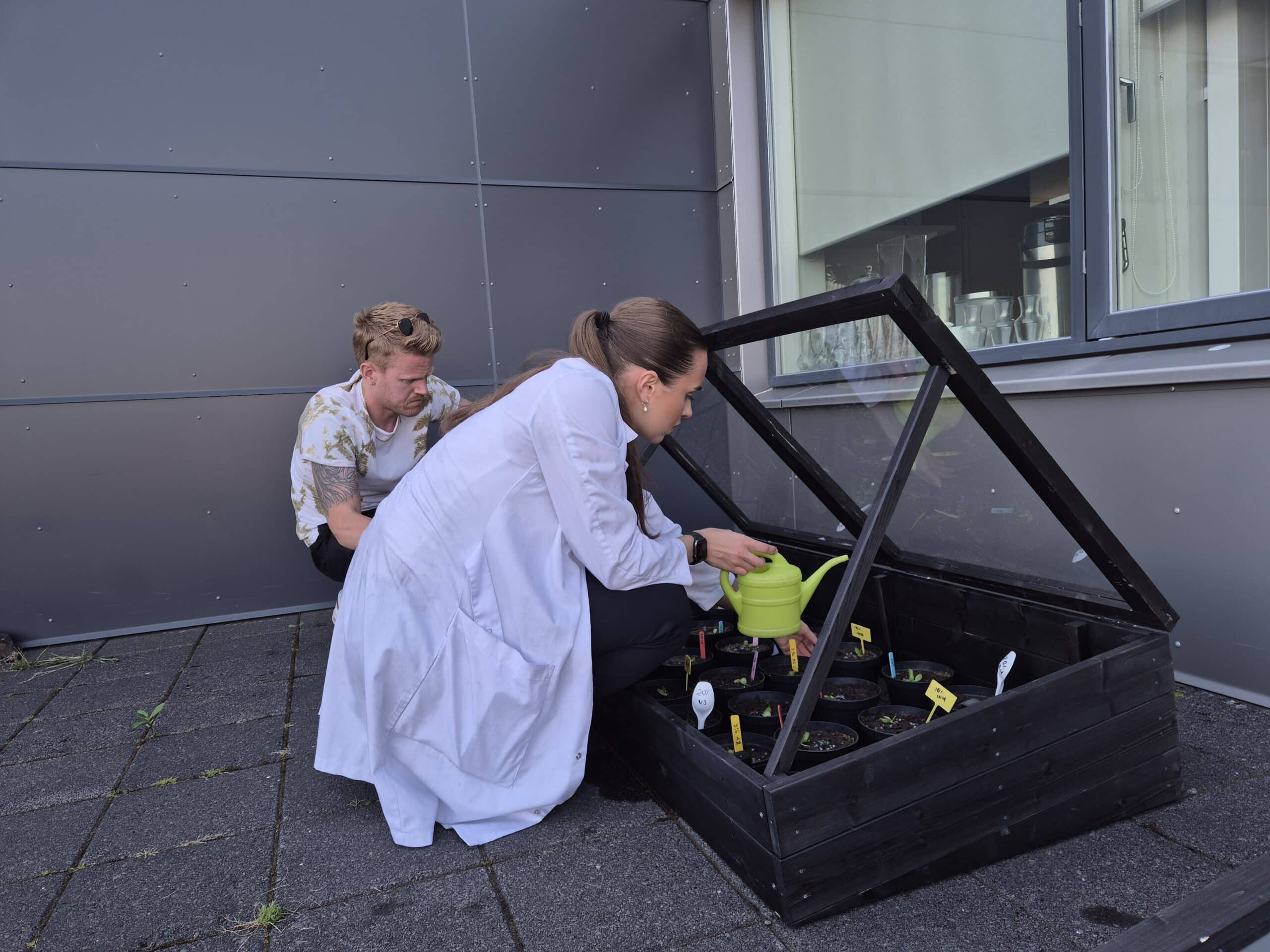
This summer, Matís, in collaboration with the Icelandic Ocean Cluster, has been conducting an exciting research project examining the effects of biochar on soil and plant growth. The project was funded by the Student Innovation Fund and also falls under a larger research project investigating the potential of using biochar as a soil amendment; the project Soil improving biomaterials which is led by the Icelandic Ocean Cluster.
The project was carried out by a student who oversaw the day-to-day running of the experiment this summer, Ásdís Agla Sigurðardóttir. She has, among other things, monitored plant growth, watered the plants, managed data collection and will submit results in a final report in the coming weeks. She had this to say about the project:
„Í námi mínu í matvælafræði vaknaði áhugi minn á sustainability og hvernig rannsóknir stuðla að þróun sjáflbærni og nýsköpunar í matvælaframleiðslu. Þegar ég kynntist verkefninu Lífkol: brú milli fiskeldis og landbúnaðar sá ég kjörið tækifæri til að tengja saman þessi áhugasvið.“
In the experiment, which took place on the rooftop of Matís's facilities at Vínlandsleið, kale plants were grown in various mixtures of compost and biochar. Among the materials used were biochar produced from aquaculture sludge. The aim was to see whether these unconventional biochar materials have comparable or even better effects than conventional biochar made from wood residues.
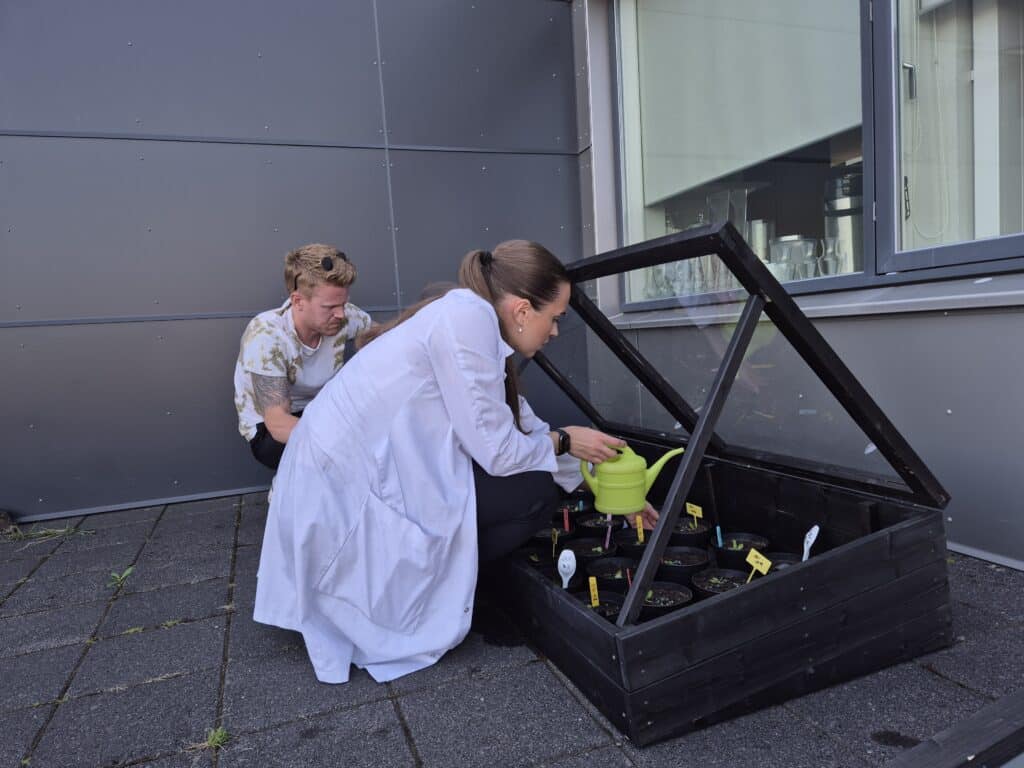
"It surprised me how variable the effects can be depending on the biochar produced from different raw materials. There appears to be a noticeable difference between biochar from saltwater aquaculture sludge on the one hand and freshwater on the other. It was also interesting to see the effects of different concentrations, i.e. the proportion of biochar in the compost and how it affected plant growth." segir Ásdís.
This project represents an important step towards the sustainable utilisation of organic by-products and improved soil management. The results could have a positive impact on how we think about waste streams and agriculture in the future, and who knows – biochar from aquaculture sludge may well become part of the solution. We look forward to sharing the results when they are available. The results will also be of use to the European project OCCAM which launched in May 2025.
Grants for students, such as this one from the Student Innovation Fund, are invaluable for young people who want to gain experience in real research projects and contribute to innovation and sustainability.
"The experience has been very educational and enjoyable. I got to work independently, participate in decisions and receive constructive feedback. I learned a great deal about all aspects of research work, from experimental design to data analysis, and built my confidence in working within a research environment." Says Ásdís in closing.
Matís regularly welcomes students into a variety of projects and encourages those who are interested to get in touch – perhaps it will be you who takes part in an experiment next summer!
The results of the project will be published in a report later this autumn.
For further information, contact:
Jónas Baldursson – jonasb@matis.is
Katrín Hulda Gunnarsdóttir – katrinh@matis.is