
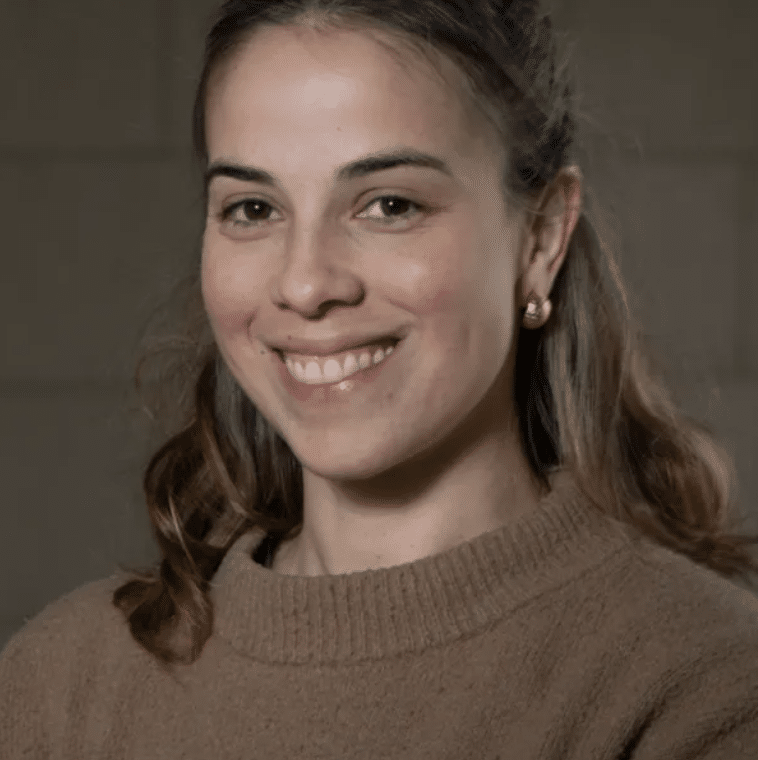
On Tuesday, 16 December 2025, Clara Maria Vasquez-Mejia defended her doctoral thesis in Food Science at the Faculty of Food Science and Nutrition at the University of Iceland. The thesis is entitled: Environmental Impacts of Atlantic Salmon Aquaculture in Iceland, with Focus on Water Scarcity Footprint.
The opponents were Dr. Alexis Laurent, Professor at the Technical University of Denmark (DTU), and Dr. Giacomo Falcone, Associate Professor at the Università Mediterranea di Reggio Calabria.
The supervisors were Ólafur Ögmundarson and María Guðjónsdóttir. Also serving on the doctoral committee were Alessandro Manzardo, Associate Professor, and Hildur Inga Sveinsdóttir, Lecturer.
Ingibjörg Gunnarsdóttir, Professor and Deputy Head of the Faculty of Food Science and Nutrition, chaired the ceremony, which took place in the Ceremonial Hall of the University of Iceland.
Summary
Aquaculture plays an increasingly important role in global food security. Salmon farming in particular has grown rapidly in Iceland, partly due to access to clean water and renewable energy. In this doctoral research, Life Cycle Assessment (LCA) was applied to evaluate the environmental impacts of Icelandic salmon aquaculture, with special emphasis on water scarcity and carbon footprint throughout the entire value chain. The research consisted of three scientific papers. The first was a systematic review of LCA studies on aquaculture with a focus on quantitative water use. The second paper applied life cycle assessment from cradle to farm gate for land-based salmon farming in Iceland, examining the effects of the energy mix and assessing the potential environmental benefits of utilising aquaculture waste as fertiliser based on its nitrogen, phosphorus and potassium (NPK) content. The third paper applied a country-level analysis comparing the embedded water and carbon footprint of feed ingredients used in land-based and sea-based salmon farming, taking into account the traceability of ingredients to their countries of origin. The results show that while Iceland benefits from renewable energy and an abundance of freshwater, the aquaculture industry indirectly places an environmental burden on other countries through the production and importation of feed from abroad. The research highlights the importance of selecting more sustainable feed ingredients and of incorporating water scarcity and related environmental impacts into the development of future salmon aquaculture in Iceland.
- Vinningshafi teiknisamkeppni barna á Vísindavökunni
- Áhugaverð erindi á WEFTA 2026
- Kennarar frá Københavns Professionshøjskole í heimsókn hjá Matís
- Johan Robbens discusses the opportunities and challenges of using algae in food at WEFTA 2026
- Matís is leading a new project, CLEAR-WATER – Harmonising Aquatic Litter Monitoring and Assessment Across EU Waters