


New research by Matís reveals the carbon footprint of key Icelandic food products – milk, meat and vegetables – and lays the groundwork for public information on environmental impacts in the ÍSGEM database.
In the project Carbon Footprint of Icelandic Foods , KÍM project, a collaboration between Matís, the University of Iceland and EFLA, has developed a consistent and scientifically supported methodology for assessing greenhouse gas emissions from Icelandic food production. The project covered four main food categories: milk, beef, lamb and vegetables (potatoes and cucumbers). The aim of the project was not only to develop the methodology but also to carry out calculations using Icelandic data and compare the results against European benchmarks.
Data Collection and Methodology Based on International Standards
Data collection was carried out in close collaboration with domestic producers and stakeholders. Where primary data were limited, internationally recognised databases were used to ensure reliability and comparability. Calculations were largely based on life cycle assessment (LCA) in accordance with ISO standards, while also taking into account the GHG Protocol, Product Environmental Footprint (PEF) and Environmental Product Declaration (EPD) methodologies.
Results Show Icelandic Foods Comparable to European Benchmarks
The results show that the calculated carbon footprint of Icelandic foods is generally in a similar range to that reported for comparable foods in Europe according to published studies. However, there is considerable variation between product categories and production methods. The analysis highlights certain strengths of Icelandic food production, such as the use of renewable energy and short value chains, but also the need for further data to enable more precise comparisons with other countries.
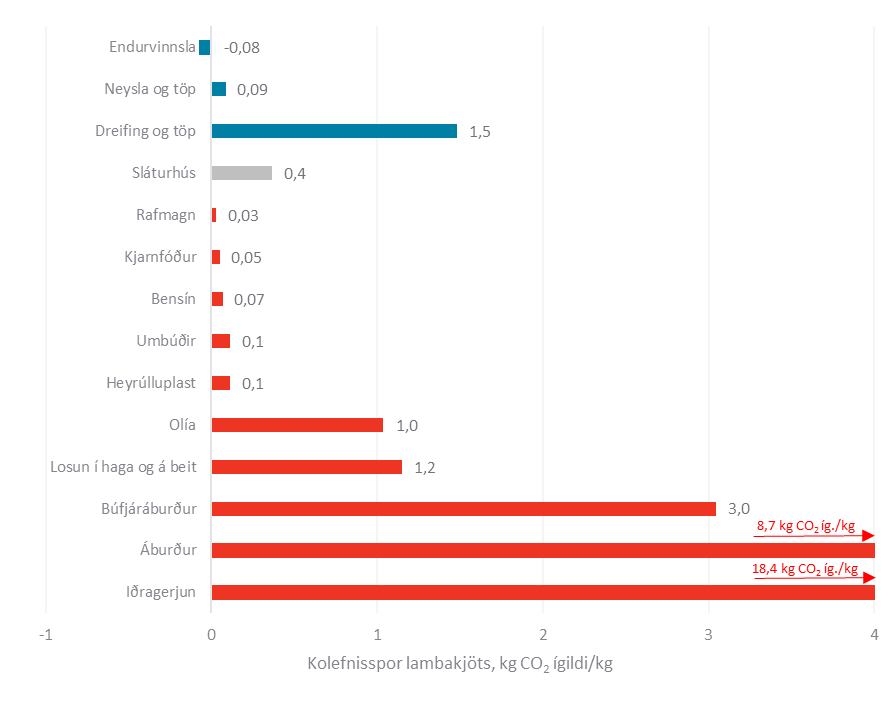
Carbon Footprint of Foods Made Accessible in the ÍSGEM Database
The project also laid the groundwork for carbon footprint data to be published in the ÍSGEM database, where the public, policymakers and producers can access information transparently. Work is still underway on how the results will be presented in the database, both in terms of format and data precision.
Þó verkefnið einblíni á kolefnisspor (GWP100) sýnir það skýrt mikilvægi þess að bæta við fleiri umhverfisáhrifaflokkum í framtíðinni, svo sem vatnsnotkun, næringarefnaauðgun og áhrif á líffræðilega fjölbreytni, til að ná heildstæðri mynd af sustainability íslenskra matvæla.
The project continues under the name KÍM 2, where further analysis of the carbon footprint of additional Icelandic foods will be undertaken. A new project, KÍM – Seafood, has also been launched, focusing on emissions from Icelandic fish products. Through these follow-up projects, work will continue on building a comprehensive picture of the environmental impacts of Icelandic food production from land to sea.
The KÍM project was carried out with support from the Icelandic Food Fund..